When water gets into your home or business, you need more than someone who can mop up a few inches off the floor. You need a team that will track down where the moisture actually traveled, dry the property the right way, repair what's damaged, and help you get your life back on track.
Gainesville Water Damage provides water damage restoration in Buford, GA, for homeowners, businesses, landlords, and property managers. Historic properties, established neighborhoods, newer construction, commercial buildings — the focus stays the same no matter what: get the water out, clean up the aftermath, repair the damage, and get you back to normal.
Buford is a busy place — homes, shops, restaurants, workplaces, and plenty of recreation near Lake Lanier and the major roads running through the area. When water damages a property here, getting it usable again fast is what matters most.
The Puddle Is Never the Whole Story
Water takes the path of least resistance. It runs beneath flooring, slips through wall cavities, pools behind cabinets, and drips from one floor down into the one below.
By the time you spot a stain or a wet patch of carpet, moisture has often already reached materials you can't see at all — carpet padding, subflooring, drywall, insulation, wood framing, trim. All of it holds water differently, and all of it can stay wet long after the surface looks fine.
That's why we don't treat this like a basic cleanup job. We chase down the full moisture pattern so the property gets dried properly before anyone starts repairs.
Fast Extraction Limits How Bad It Gets
Step one in any Buford water damage job is controlling the source and pulling out standing water — the sooner that starts, the sooner structural drying can begin.
We extract from carpet, hard-surface flooring, basements, commercial spaces, wherever the water's landed. Once the standing water is gone, moisture detection tools help us find the wet spots that would otherwise go unnoticed until it's too late.
One Plan for Cleanup, Drying, and Repairs
A lot of homeowners tell us the hardest part of dealing with water damage isn't the water itself — it's figuring out who's responsible for which piece of it. A plumber fixes the leak and leaves the wet walls behind. A cleanup crew pulls the water and leaves the repairs for somebody else to sort out.
We treat the whole thing as one project.
Once extraction's done, we dry the structure, clean the affected surfaces, remove anything that can't be saved, and handle the repairs the room actually needs — drywall, trim, flooring, insulation, ceilings, cabinets, paint, whatever it takes. We're not interested in leaving you with exposed walls and a stack of phone numbers to call. We want to carry the property from the emergency all the way to the finished repair, so the room feels like itself again.
Water Damage We Handle Around Buford
Broken and Burst Pipes
A broken supply line can dump a serious amount of water in very little time, and it doesn't stay put — ceilings, walls, cabinets, carpet, adjoining rooms all get hit. Once the pipe itself is fixed, we remove the water and dry out everything it reached.
Appliance Leaks
Washing machines, dishwashers, refrigerators, ice makers, water heaters — they all leak eventually, usually without warning. That water often travels under cabinets or flooring long before you actually see it.
Basement and Lower-Level Flooding
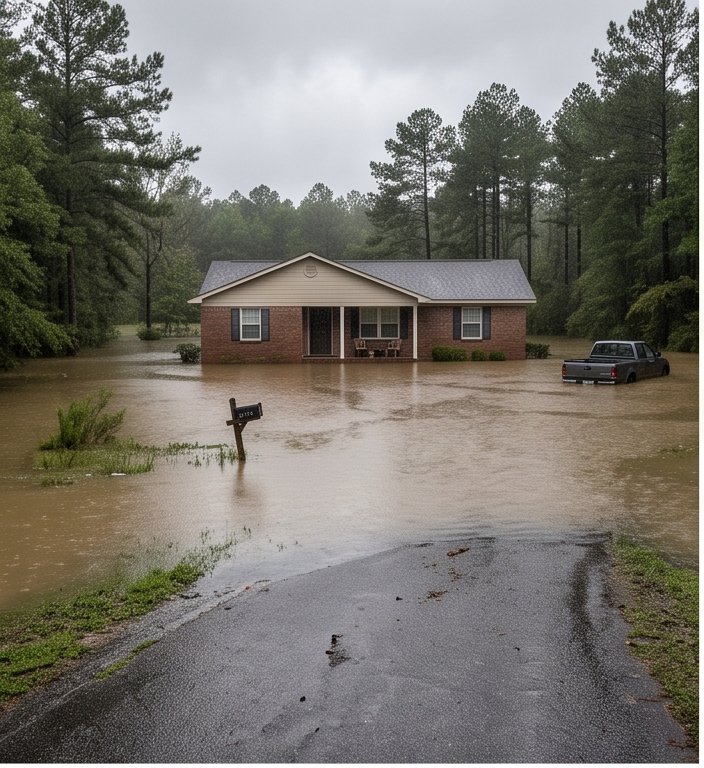
Basements flood from plumbing failures, drain backups, exterior openings, or storm runoff. We extract the water, move affected contents, remove what can't be saved, and dry the space thoroughly.
Roof and Storm Water Intrusion
Wind and rain expose weak spots around shingles, flashing, vents, windows, and doors. We can get interior drying started while the exterior opening itself is being repaired.
Sewage Backups
Wastewater from a toilet, drain, sewer line, or septic system isn't ordinary water, and it shouldn't be treated like it. The CDC notes that floodwater can contain sewage, bacteria, and other contaminants — this kind of job calls for real caution, not shortcuts.
Commercial Water Damage
Water damage at a business hits employees, customers, inventory, equipment, and daily operations all at once. We build a cleanup and drying plan around how the business actually needs to keep functioning.
What Actually Happens During Restoration
We start by finding the source and inspecting every area it might have reached — flooring, drywall, ceilings, cabinets, insulation, nearby rooms, all of it.
Standing water comes out first. From there, we figure out whether carpet, padding, drywall, trim, insulation, or flooring can be dried in place or needs to come out entirely.
Drying equipment gets placed based on the size and shape of the affected space — dehumidifiers pull moisture from the air, air movers help pull it out of the materials themselves. We track drying progress with actual measurements, not just by feeling a wall and guessing.
Once the space reaches an acceptable dryness, we clean it and move into repairs. The point of the final work isn't just "dry" — it's making the room look and function the way it did before.
Taking Some of the Stress Off Your Plate
Water damage brings a long list of worries. Can the flooring be saved? Is there water behind the wall? Is the room going to smell afterward? What needs replacing? How soon can everyone actually use the space again?
We explain what we find and why we're recommending each step. If something can realistically be restored, we go that route. If it's too damaged or too contaminated to keep, we'll tell you exactly why it has to go.
Photos, moisture readings, and a record of the work performed can also help down the line — coverage depends on your policy and the cause of the loss, but solid documentation makes that claim conversation a lot easier.
Safety First, Cleanup Second
Stay out of any water that might be in contact with electrical wiring, outlets, appliances, or extension cords, and steer clear of sagging ceilings — wet drywall gets unstable fast.
If the water came from outdoor flooding or a sewage backup, keep kids and pets away from the area entirely, and wear protective gear if contact can't be avoided. The CDC advises against switching electrical power on or off while standing in water, and recommends treating any flooded building as potentially contaminated until proven otherwise.
Get Your Buford Property Back to Normal
You shouldn't be stuck living with exposed drywall, lingering damp smells, ruined flooring, or half-finished repairs once the initial emergency cleanup wraps up.
Contact Gainesville Water Damage for water damage restoration in Buford, GA. We'll remove the water, dry the property completely, clean up the affected areas, and finish the repairs your space needs to feel normal again.
The damage may have happened without warning. Your recovery shouldn't have to — it should be organized, clear, and focused on putting the whole thing behind you.