Sewage Backup Cleanup in Gainesville, GA
A sewage backup is more than an unpleasant plumbing problem. It can expose your home or business to wastewater, bacteria, organic waste, and other contaminants. Sewage may spread across floors, soak into drywall, enter cabinets, or contaminate items stored near the affected area.
Gainesville Water Damage provides sewage backup cleanup in Gainesville, GA, with careful attention to contamination, damaged materials, odor, and structural drying. Because sewage presents health and safety concerns, affected areas should be isolated and handled differently from an ordinary clean water leak.
Why Sewage Backups Require Professional Cleanup
Sewage may contain human waste, microorganisms, chemicals, and debris. The contamination is not always visible. Water that looks relatively clear can still contain harmful material.
The CDC advises people who must enter flood water or sewage contaminated areas to wear rubber boots, rubber gloves, and goggles. Open cuts should be covered, and direct contact with contaminated water should be avoided. ([CDC][5])
Children, pets, older adults, and people with respiratory conditions or weakened immune systems should remain away from the affected area.
Household cleaning products and air fresheners are not enough to restore a sewage damaged room. The contaminated water must be removed, affected materials must be evaluated, and remaining surfaces must be thoroughly cleaned.
Common Causes of Sewage Backups
Sewage can enter a property through toilets, drains, plumbing fixtures, or damaged waste lines.
Possible causes include:
- Clogged drain lines
- Tree roots entering sewer pipes
- Damaged or collapsed plumbing
- Grease and debris buildup
- Flushed objects that block the line
- Problems with a septic system
- Municipal sewer problems
- Heavy rain entering or overwhelming drainage systems
- A failed sewage ejector pump
- Improper plumbing connections
A plumber or sewer service team may need to clear, inspect, or repair the line before cleanup can be completed.
What to Do After a Sewage Backup
Keep people and pets out of the area. Close doors when possible and avoid carrying contaminated items through clean rooms.
Do not:
- Walk through sewage without protective equipment
- Use a standard household vacuum
- Place fans directly on contaminated water
- Touch your face while handling damaged items
- Mix cleaning chemicals
- Attempt to save contaminated food
- Use plumbing fixtures until the cause is understood
- Allow children or pets near the affected space
Turn off heating and cooling systems when there is a concern that contaminated air or moisture may spread through nearby ducts. Do not operate electrical equipment while standing in wet areas.
Our Sewage Backup Cleanup Process
Containment and Safety Assessment
The affected area is evaluated for electrical concerns, contaminated materials, and the possible movement of sewage into adjoining rooms.
Containment may be used to separate the cleanup area from unaffected parts of the property. The appropriate approach depends on the size and location of the backup.
Sewage and Water Removal
Standing sewage and wastewater are extracted using equipment intended for contaminated losses. Solid debris may also need to be collected and disposed of properly.
The sewage source must be corrected before cleanup can be considered complete. Continuing to use toilets, sinks, or drains may cause another overflow.
Removal of Contaminated Materials
Highly absorbent materials can be difficult to clean after contact with sewage.
Materials that may require removal include:
- Carpet padding
- Saturated drywall
- Insulation
- Particleboard
- Certain types of flooring
- Cardboard
- Upholstered items
- Mattresses
- Ceiling tiles
- Heavily contaminated trim
The CDC recommends removing drywall and insulation contaminated by sewage or flood water and thoroughly cleaning wet surfaces that can be retained. ([CDC][8])
Whether a specific item can be saved depends on its material, condition, value, and level of contamination.
Cleaning and Disinfection
Remaining hard surfaces are cleaned to remove soil and organic material before the appropriate disinfecting process is performed. Skipping the cleaning stage can make disinfection less effective.
Concrete, tile, plumbing fixtures, metal, sealed surfaces, and structural components may require different cleaning methods. Care must be taken not to mix incompatible products.
Structural Drying
After contaminated water and damaged materials are removed, the remaining structure must be dried. Dehumidifiers and air moving equipment may be used under controlled conditions.
Equipment placement should avoid spreading contamination into clean areas. Drying continues until affected materials reach appropriate moisture levels.
Odor Management
Sewage odor often improves after contaminated water and materials are removed. Persistent odor may indicate that contamination remains beneath flooring, behind walls, inside cabinets, or in another concealed area.
Fragrance and deodorizing products should not be used to hide an unresolved sewage problem.
Sewage Backups in Basements and Bathrooms
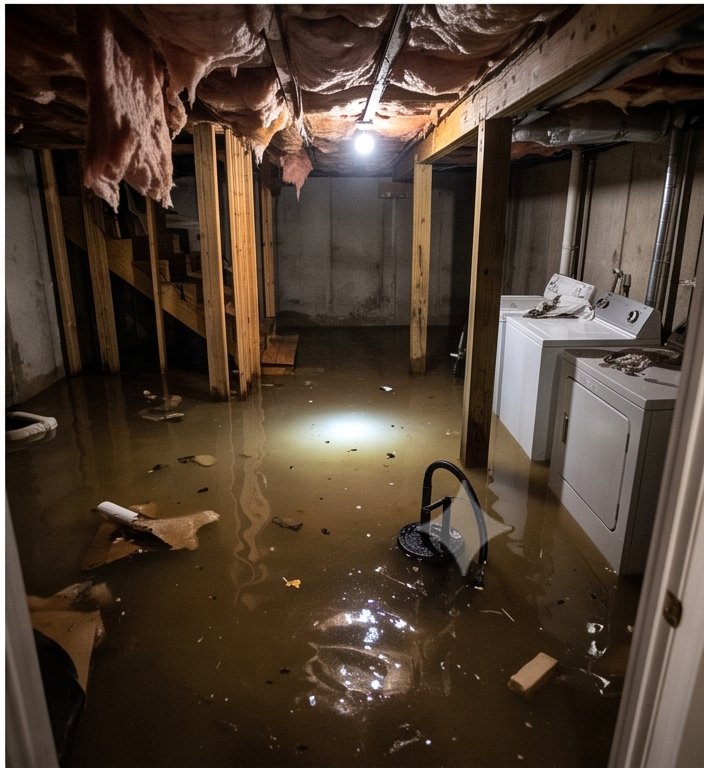
Basements are common locations for sewage backups because they contain low level drains, toilets, and plumbing fixtures. Wastewater may spread across concrete, carpet, finished walls, stored boxes, and mechanical rooms, creating conditions that may also require basement flood cleanup.
Bathroom backups can travel beneath vanities, flooring, and baseboards. Water may also move into adjoining hallways, bedrooms, or closets.
Even a small overflow should be evaluated carefully when sewage is involved. The amount of visible water does not always indicate the full area of contamination.
What Can Be Saved After Sewage Damage?
Hard, nonporous objects may sometimes be cleaned and disinfected. Porous items are more difficult because contaminated water can penetrate beneath the surface.
Items that may be recoverable include:
- Glass
- Metal
- Some hard plastics
- Sealed stone
- Certain finished wood surfaces
- Washable clothing, depending on contamination
The CDC recommends washing clothing exposed to flood or sewage water in hot water and detergent before reuse. ([CDC][10])
Food, medicines, cosmetics, baby products, and absorbent personal items should be handled cautiously. When in doubt, prioritize health and safety.
Sewage Cleanup for Gainesville Properties
A sewage backup can be stressful and embarrassing, but it is also a problem that requires a prompt, organized response. There is no reason to feel uncomfortable asking for help.
Gainesville Water Damage provides sewage backup cleanup in Gainesville, GA, for bathrooms, basements, utility areas, commercial spaces, and other affected rooms. We focus on removing contamination, cleaning retained surfaces, drying the structure, and helping you understand what must be replaced.
Request Sewage Backup Cleanup
Do not allow sewage to remain inside your property or attempt to cover the odor with household products. Contaminated water can spread into hidden areas and affect materials beyond the original overflow.
Contact Gainesville Water Damage for sewage backup cleanup in Gainesville, GA. We will help contain the affected area, remove wastewater, clean salvageable surfaces, dry the structure, and prepare the space for repairs.